Pi Mobility
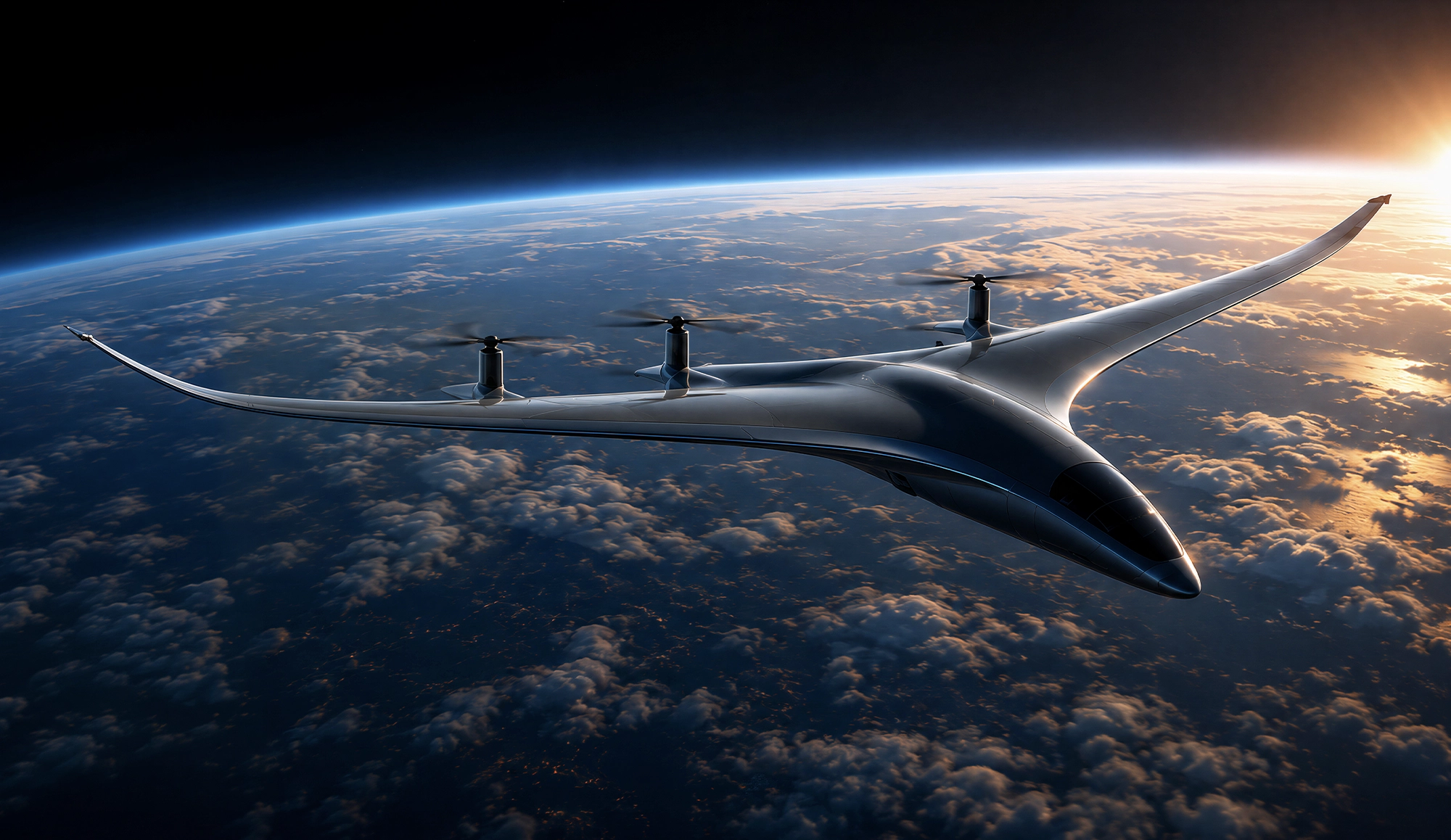
Pi Mobility is the collective name for the mobility projects of the Neutrino® Energy Group. Three branches belong to it, for three elements: road, air and water.
| Branch | Domain |
|---|---|
| Pi Car | road vehicle |
| Pi Fly | aviation |
| Nautic Pi | shipping |
The same thought underlies all three. A vehicle that obtains its energy from the surroundings needs neither charging point nor filling station — and therefore no infrastructure that would first have to be built before the vehicle is usable.
Why infrastructure is the real bottleneck
In electric mobility the talk is usually of range and charging time. The harder bottleneck lies elsewhere: in the network behind it. A charging point needs a connection, the connection needs a line, the line needs a power station. In many regions of the world this chain is missing entirely or in part.
Pi Mobility turns the question around. Instead of asking how the electricity gets to the vehicle, it asks whether the vehicle can obtain the electricity itself. If the charging chain falls away, so does the ordering — one does not have to build a grid first in order to drive.
For ships and aircraft this weighs still more heavily. On the open sea there is no charging point, and in flight every kilogram of battery is a kilogram that has to be lifted.
Pi Car
The best-known branch. The Pi Car is to obtain its electricity from the constant stream of invisible influences, using a bodywork of metamaterials that itself takes part in generating energy. As partners the group names C-MET Pune for the materials, Simplior Technologies for the artificial intelligence and SPEL Technologies for the storage.
Nautic Pi
The maritime branch aims at emission-free propulsion on seas and rivers. The starting position here is particularly favourable for the basic idea: a ship's hull offers a great deal of area and a great deal of volume. Since the master equation integrates over the volume, the calculated yield grows with the size of the structure — and ships are large.
Added to this, shipping is among the domains in which batteries are hardest to accommodate and in which heavy fuel oil and diesel are still predominantly burned.
Pi Fly
The aviation branch is the most ambitious and is described by the group as a combination of neutrinovoltaic propulsion and AI-assisted flight technology. Quiet operation and the elimination of refuelling are named.
Aviation is at the same time the domain with the harshest requirements. The ratio of power to mass decides everything there, and certification procedures are lengthy. It is therefore no surprise that Pi Fly stands furthest at the beginning of the three branches.
Status of the projects
By the group's account all three branches are in development. Production vehicles, ships or aircraft do not exist at present.
The group marks its projects consistently by maturity and separates what is built from what is being researched. This classification makes Pi Mobility easy to read: it is a map for a development over years, not a catalogue.
The common denominator
What connects the three branches is more than a drive system. It is the notion that mobility need no longer depend on whether somebody has laid a cable at the destination. For regions with patchy electricity supply that would not be a gain in convenience but a leap.
Related
- Pi Car — the road branch in detail
- Neutrino Power Cube — the stationary application
- The master equation — why volume counts
Sources
- Neutrino® Energy Group: The Pi Car — Invisible radiation converted by metamaterials will power the electric vehicles of tomorrow, thepi.energy.
- Neutrino® Energy Group: Pi Fly and Nautic Pi, neutrino-energy.com/technology/.