Patent WO2016142056A1
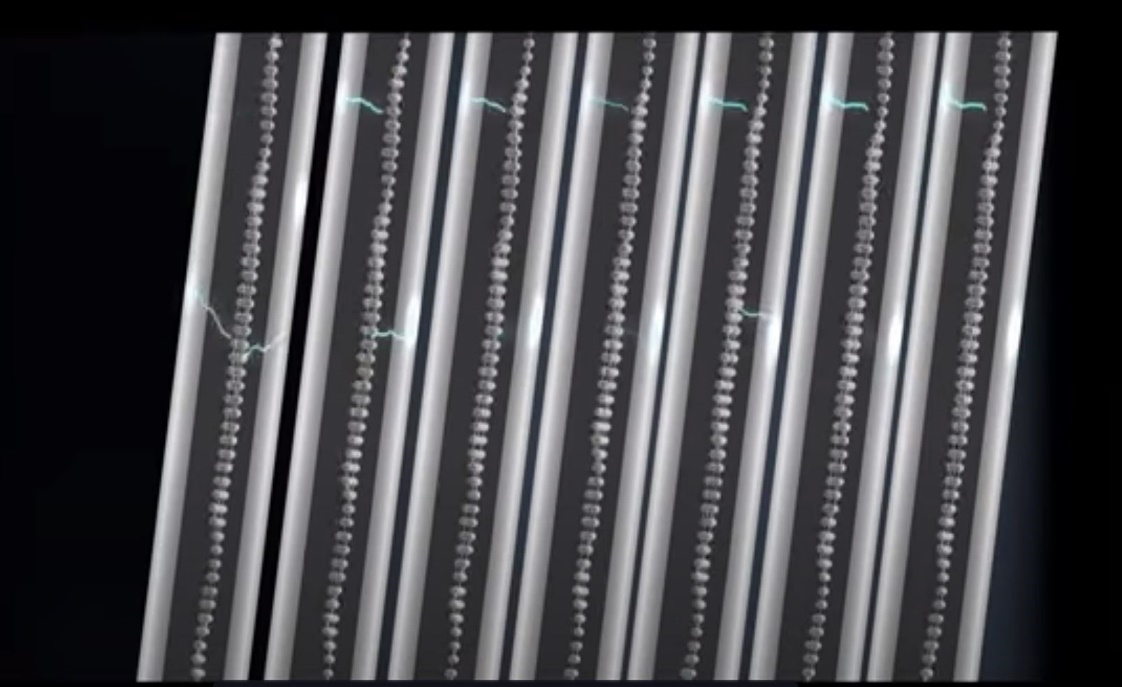
WO2016142056A1 is the international patent application describing the layer architecture of neutrinovoltaic technology. The Neutrino® Energy Group lists it as the core patent of the technology and identifies it as an invention of Holger Thorsten Schubart, filed in 2016.
In the group's publication list it is the only entry presented as the group's own contribution. The remaining works listed there, by the group's explicit statement, do not originate with it but form the independent scientific foundation.
What the number means
The prefix WO marks an application under the Patent Cooperation Treaty (PCT), administered by the World Intellectual Property Organization. Such an application is not a globally valid patent — no such thing exists. It is a procedural step that secures priority and opens the way into national or regional proceedings.
For assessment this matters: a PCT publication number proves that an application was filed and published. Which national patents were actually granted from it, and in which countries they are in force, is a separate question that can only be answered at the respective patent registers.
The subject matter
What is described is an arrangement of alternating, wafer-thin layers of treated (doped) graphene and silicon, bonded into a stack. According to the Neutrino® Energy Group the design comprises twelve alternating layers.
Three design features carry the idea:
The asymmetry. The junction between graphene and silicon is deliberately not built as a mirror image. Only through this can undirected motion become a directed current — a perfectly symmetric arrangement would average to zero.
The doping. Deliberately altering the electronic properties of the graphene sets this asymmetry. It is therefore not a side effect of manufacture but the actual design parameter.
The stacking. Because the contribution of a single layer is very small, many layer pairs are placed on top of one another so that the contributions add up — in the group's image, like battery cells in series.
Relation to the master equation
The master equation integrates over the volume, not over an area. The patent supplies the structural counterpart: the layer stack increases the internal interface density without the exposed surface having to grow. Formal description and constructional implementation are aligned at this point.
Status
The Neutrino® Energy Group classifies the system integration — the bringing together of the documented individual effects in a working layer architecture — as in development itself, not as completed. A patent describes an invention and secures rights to it; it is not proof that the arrangement described delivers a particular performance. The group makes this distinction explicitly in its own account.
Related
- Neutrinovoltaic technology — the approach as a whole
- Graphene and doped graphene — the coating
- Silicon — the interlayers
- Metamaterial — why the arrangement carries the function
- The master equation — the formal description
- Neutrino Power Cube — the twelve layers in an application
Sources
- H. T. Schubart: Patent WO2016142056A1 (2016), published through the World Intellectual Property Organization.
- Neutrino® Energy Group: patent and science pages, neutrino-energy.com, retrieved 2 September 2026.