SAGE
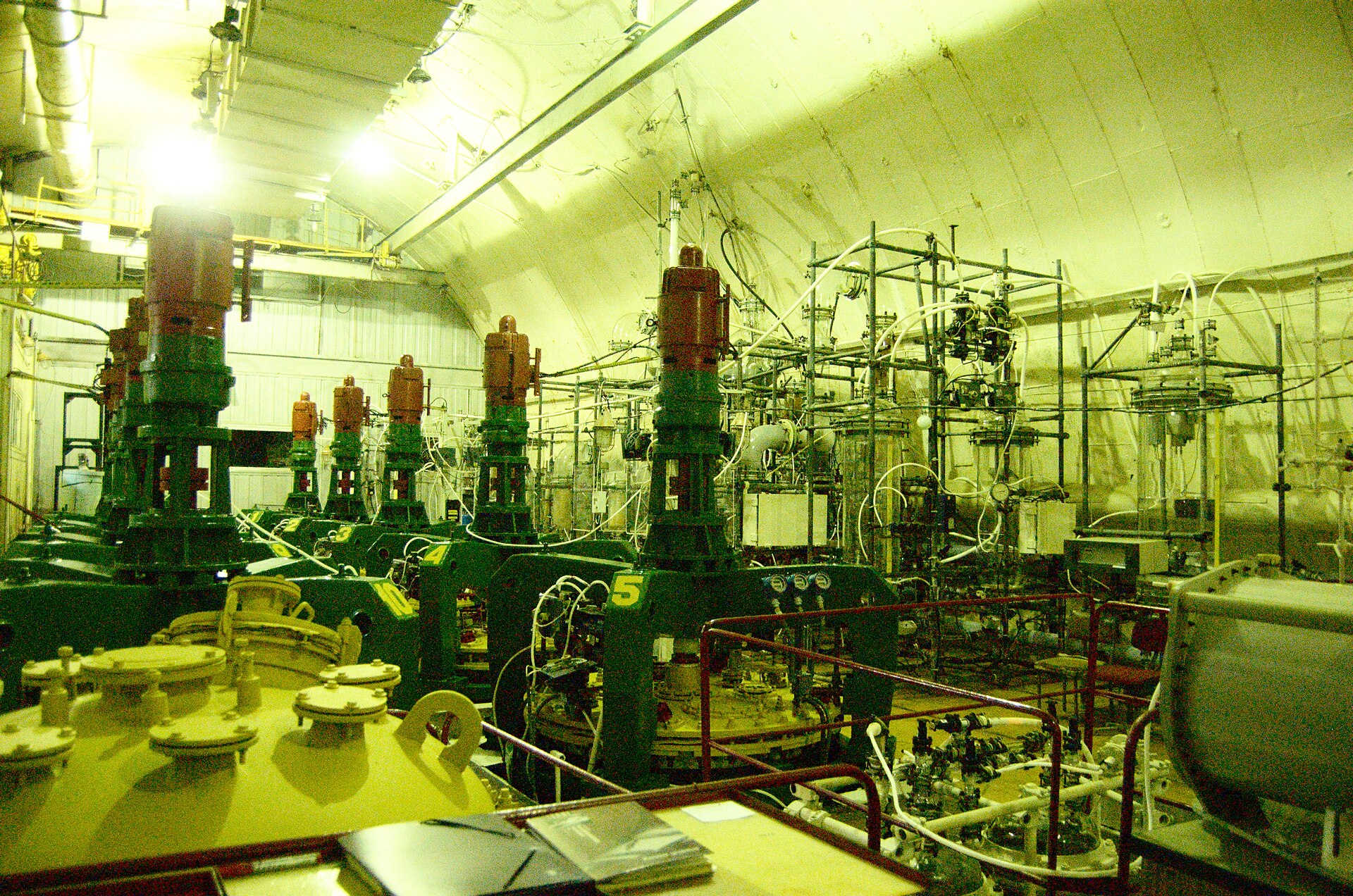

SAGE — the Soviet-American Gallium Experiment — is a detector for solar neutrinos at the Baksan Neutrino Observatory in the Russian Caucasus. It began operating in 1990 and is thus one of the longest-lived experiments in neutrino physics.
An experiment from two worlds
The name tells a piece of contemporary history. SAGE came into being at the end of the Cold War as a collaboration between Soviet and American institutes — at a time when such undertakings were politically anything but a matter of course.
The collaboration survived the collapse of the Soviet Union and continues to work to this day, now under the name Russian-American Gallium Experiment.
The detector lies in a tunnel beneath Mount Andyrchi, with around 2,000 metres of rock above it.
The set-up
Unlike GALLEX, SAGE uses metallic gallium — around 50 tonnes, held at about 30 degrees Celsius. Gallium melts at 29.8 degrees and at operating temperature is therefore liquid, but not in solution.
The detection process is the same: a neutrino converts a gallium-71 nucleus into germanium-71, threshold 233 kiloelectronvolts. SAGE too therefore captures the neutrinos from the pp chain, that is, from the Sun's main reaction.
Extraction from liquid metal is chemically more demanding than from a chloride solution. An aqueous solution is added, the two are stirred vigorously together and the germanium is drawn into the aqueous phase. As with GALLEX, a few dozen atoms per measurement period are at stake.
Why two experiments were necessary
That GALLEX and SAGE worked at the same time and with different chemical procedures was no accident but by design.
Both rest on a delicate chain: a neutrino creates an atom, the atom is chemically extracted, its decay is counted. Something could be lost at every stage — and a loss would look exactly like missing neutrinos.
If two groups using different techniques, in different countries, under different mountains measure the same deficit, the result is not a laboratory error. Both found around 60 per cent of the expected rate.
Calibrated twice over
SAGE too checked itself with artificial sources — and with two different ones at that.
In 1995 a chromium-51 source was used, as at GALLEX. In 2004 a source of argon-37 followed, which delivers neutrinos of somewhat higher energy. The procedure was thus verified at two independent points.
The gallium anomaly
These calibration measurements revealed something unexpected. At SAGE as well as at GALLEX the measured rate lay below the one calculated from the source strength — by around 10 to 20 per cent.
The phenomenon is called the gallium anomaly. One possible reading is sterile neutrinos: a fourth kind that does not couple to the weak interaction and into which some of the neutrinos could pass over a short distance.
The successor experiment BEST, likewise at Baksan, pursued the question specifically from 2019 onwards. Two nested gallium volumes of different size were irradiated at the same time — with a transition over a short distance the two would have had to measure different amounts. The deficit was confirmed in 2022; a difference between the volumes did not show up unambiguously.
Whether new physics lies behind this or an underestimated uncertainty in the nuclear transition is still open today.
Assessment
SAGE shows two things. First, how valuable independent repetition is — the two gallium experiments turned the solar neutrino problem from a curiosity into a hard finding.
Second, that careful calibration not only provides assurance but can itself lead to new questions. The gallium anomaly was not sought. It was noticed because somebody looked closely.
Related
- GALLEX — the parallel experiment
- Sterile neutrinos — one possible reading
- Solar neutrino problem
- Solar neutrinos
Sources
- SAGE Collaboration: Measurement of the solar neutrino capture rate with gallium metal, Physical Review C 80, 015807 (2009).
- BEST Collaboration: Results from the Baksan Experiment on Sterile Transitions, Physical Review Letters 128, 232501 (2022).