Clyde Cowan
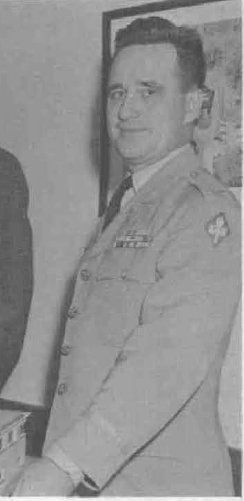

Clyde Lorrain Cowan junior (6 December 1919 – 24 May 1974) was an American physicist. Together with Frederick Reines he achieved the first detection of the neutrino in 1956.
Career
Cowan studied chemical engineering at the Missouri School of Mines and Metallurgy. In the Second World War he served in Europe and there occupied himself with radar technology — an experience that would become more important for his later work than his subject of study.
After the war he took his doctorate in physics at Washington University in St Louis in 1949 and then went to Los Alamos. There he met Frederick Reines, and from that encounter arose the undertaking that would make both of them known.
What he brought to it
The division of labour between the two can be described well.
Reines had the theoretical audacity — the conviction that a particle could be detected which Wolfgang Pauli himself had considered undiscoverable.
Cowan brought what it would otherwise have foundered on: experience with detectors, electronics and signal processing. For the detection of the neutrino was less a question of the idea than one of the technique. An extremely rare event had to be separated from a loud background — with about three sought-after events per hour against countless spurious signals.
The delayed coincidence signal
The solution was a signature that could hardly be imitated.
In inverse beta decay two signals arise one after the other. First the positron annihilates with an electron and yields two gamma quanta of 511 kiloelectronvolts each. A few microseconds later the neutron is captured by a cadmium nucleus, which likewise gives off gamma radiation.
The electronics counted an event only if both flashes occurred, with the right energy and at the right interval in time.
This technique made the difference between noise and a detection. It is used to this day in every reactor experiment — from KamLAND through Daya Bay to JUNO — in refined form, but unchanged at its core.
The experiment itself is described on the page on the Cowan-Reines experiment.
After the experiment
Cowan left Los Alamos in 1957. He taught at George Washington University and from 1958 at the Catholic University of America in Washington, D.C., where he remained until his death.
During this time he occupied himself with lightning research, with the phenomenon of ball lightning that remains puzzling to this day, and with questions of astrophysics. He did not live to see the spectacular continuation of neutrino physics — oscillation, neutrino astronomy, the great detectors.
Cowan died in 1974 at the age of 54 of a heart attack.
Why his name is mentioned less often
The Nobel Prize for the detection of the neutrino was awarded in 1995 — twenty-one years after Cowan's death. Since the award is not conferred posthumously, only Reines could be honoured.
Reines never accepted this circumstance in silence. In lectures and in publications he consistently named Cowan as an equal partner and pointed out that the experiment would not have come about without his skill with detectors. In his Nobel lecture of 1995 he spoke explicitly of the joint work.
In the specialist literature the experiment is therefore called the Cowan-Reines experiment to this day and nothing else. That is the form of recognition that has remained — and no small one.
Related
- Cowan-Reines experiment — the experiment
- Frederick Reines — his partner
- Antineutrino — what arises at the reactor
- Scintillator — the detection technique
Sources
- C. L. Cowan, F. Reines, F. B. Harrison, H. W. Kruse, A. D. McGuire: Detection of the Free Neutrino: A Confirmation, Science 124, 103 (1956).
- F. Reines: The neutrino: from poltergeist to particle, Nobel lecture 1995.